



Blog
Large Facility Flood Cleanup: Rapid Water Extraction and Drying Plan
Large Facility Flood Cleanup: Rapid Water Extraction and Drying Plan
When a large industrial or commercial facility floods, the difference between a controlled recovery and a prolonged shutdown comes down to speed, sequencing, and documentation. A rapid plan prioritizes life safety, stabilizes the building, removes water efficiently, and drives moisture out of structural materials before secondary damage escalates. TRI-WEH Restoration approaches large facility flood cleanup with a disciplined workflow designed to protect occupants, preserve assets, and return operations to normal as quickly as conditions allow.
1) Immediate Safety and Site Control
Before any equipment is deployed, the site must be made safe. Floodwater can conceal electrical hazards, chemical contamination, and trip-and-fall risks across expansive floor plates. Large facilities also introduce additional concerns such as energized machinery, elevated platforms, and confined mechanical rooms.
- Shut down power to affected zones and lock out/tag out equipment where water intrusion is present.
- Evaluate water category (clean, gray, or contaminated) and identify any industrial process fluids that may have mixed into the water.
- Restrict access using controlled entry points and establish clean/dirty pathways to reduce cross-contamination.
- Confirm air quality and ventilation status, especially in areas with boilers, generators, or chemical storage.
Safety also includes protecting the workforce with appropriate PPE, implementing slip-resistant walking surfaces where possible, and coordinating with facility leadership to maintain compliance with internal safety programs and regulatory requirements.
2) Rapid Assessment and Moisture Mapping
Large-scale flood cleanup requires a structured assessment so teams don’t waste hours chasing the wrong priorities. TRI-WEH Restoration begins with a zone-based survey that identifies the deepest water, the most sensitive assets, and the materials most vulnerable to swelling, corrosion, or microbial growth.
- Document water depth and affected square footage by zone, including mezzanines, offices, and storage areas.
- Perform moisture mapping on walls, slabs, and critical assemblies to establish a baseline for structural drying.
- Identify high-value equipment and inventory requiring immediate relocation, elevation, or protective wrapping.
This assessment drives the extraction plan, equipment staging, and drying strategy while creating a defensible record for internal reporting and insurance coordination.
3) Water Extraction at Industrial Scale
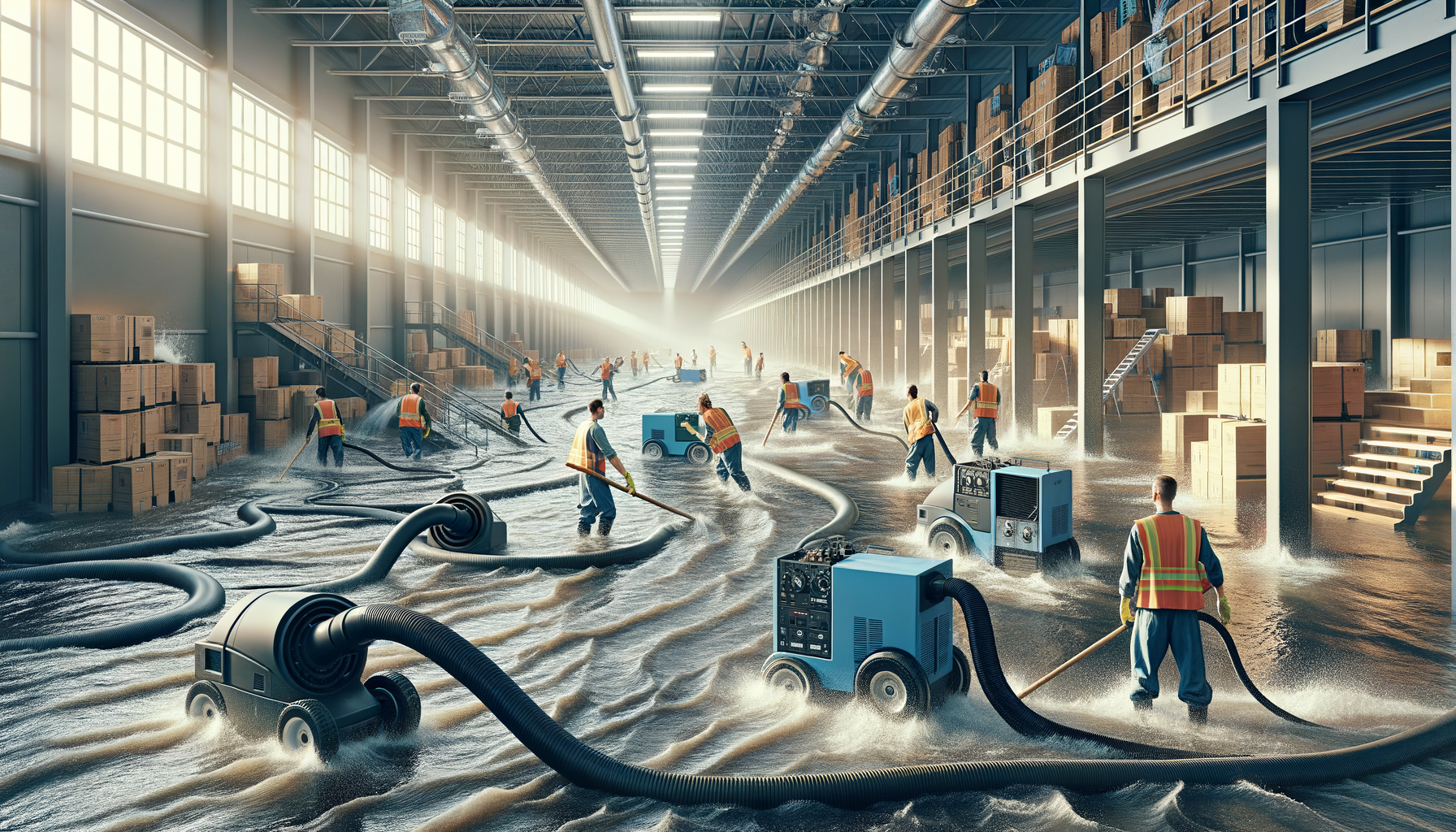
Water extraction is the fastest way to reduce damage and shorten downtime. In large facilities, the goal is to remove bulk water aggressively while preventing re-wetting and tracking where water is migrating. TRI-WEH Restoration deploys commercial-grade water extractors and pumps selected for the volume, debris load, and access constraints of the site.
- Use high-capacity water extractors for wide-area recovery on smooth floors and low spots.
- Deploy submersible pumps in deep water zones, pits, and elevator shafts (once cleared for safety).
- Extract in a logical sequence: deepest zones first, then perimeter and secondary pathways to prevent backflow.
- Maintain continuous removal at drains and sumps to limit hydrostatic pressure and seepage.
In warehouses and production areas, extraction must be coordinated with traffic flow, forklifts, and critical operations. Proper hose routing, signage, and equipment placement reduce hazards and keep the project moving.
4) Structural Drying Strategy for Large Buildings
After bulk water is removed, structural drying becomes the controlling factor. Large facilities often contain thick concrete slabs, masonry walls, insulated panels, and layered flooring systems that hold moisture longer than expected. Effective drying requires airflow, dehumidification, and temperature control sized to the building volume.
- Establish drying zones with containment where needed to improve efficiency and protect unaffected areas.
- Use high-velocity air movers to drive evaporation from surfaces and edges where moisture concentrates.
- Deploy desiccant or refrigerant dehumidification based on building size, temperature, and moisture load.
- Monitor and adjust daily using moisture readings, humidity levels, and drying logs.
Structural drying is not “set it and forget it.” Equipment placement and run times are refined as conditions change, ensuring the facility reaches target drying standards without unnecessary energy waste.
5) Material Handling, Contents Protection, and Corrosion Control
Industrial and commercial settings frequently include sensitive electrical panels, conveyors, controls, and inventory. Quick action can prevent permanent loss. TRI-WEH Restoration coordinates with facility teams to protect assets while cleanup proceeds.
- Relocate or elevate inventory and remove wet packaging to reduce mold risk and product loss.
- Implement corrosion control measures for metal components and machinery as soon as practical.
- Remove unsalvageable porous materials when required to open assemblies and accelerate drying.
Where operations must continue in part of the building, phased restoration and controlled pathways help maintain productivity while drying and repairs progress.
6) Microbial Risk Management and Verification
Flood conditions can create ideal environments for microbial amplification if moisture persists. A disciplined plan includes targeted cleaning, monitoring, and verification. Mold inspection is appropriate when materials remained wet beyond safe timeframes, when humidity stayed elevated, or when odors and staining indicate potential growth.
- Use moisture data to identify high-risk zones such as wall bases, storage rooms, and underfloor cavities.
- Apply cleaning and sanitizing protocols aligned with the water category and facility use.
- Verify drying progress with documented readings before closing walls or reinstalling materials.
While flood response focuses on water, facilities that also experienced fire-related impacts or equipment overheating may require smoke remediation in adjacent areas to protect indoor air quality and prevent odor transfer into clean zones.
7) Documentation, Communication, and Return-to-Service
Large facility recovery succeeds when stakeholders receive clear updates and decisions are based on measurable data. TRI-WEH Restoration maintains structured documentation, including extraction volumes where feasible, equipment deployment records, and drying logs, then supports a controlled return-to-service plan.
- Daily reporting on affected zones, drying status, and safety issues.
- Clear criteria for decommissioning equipment based on moisture targets, not guesswork.
- Phased handoff to repairs and reconstruction to minimize downtime.
A rapid water extraction and drying plan is more than a checklist—it is an operational strategy. With the right sequencing, properly sized water extractors, disciplined structural drying, and careful safety controls, large facilities can move from flood impact to stable recovery with less disruption and lower total loss.
Need restoration help in Cincinnati?
TRI-WEH Restoration is a locally owned, IICRC-certified restoration contractor based in Cincinnati, Ohio, serving homes and businesses across Greater Cincinnati 24/7. If you need water damage restoration or air duct cleaning, call us any time at (513) 231-6653 or request service online.