



Blog
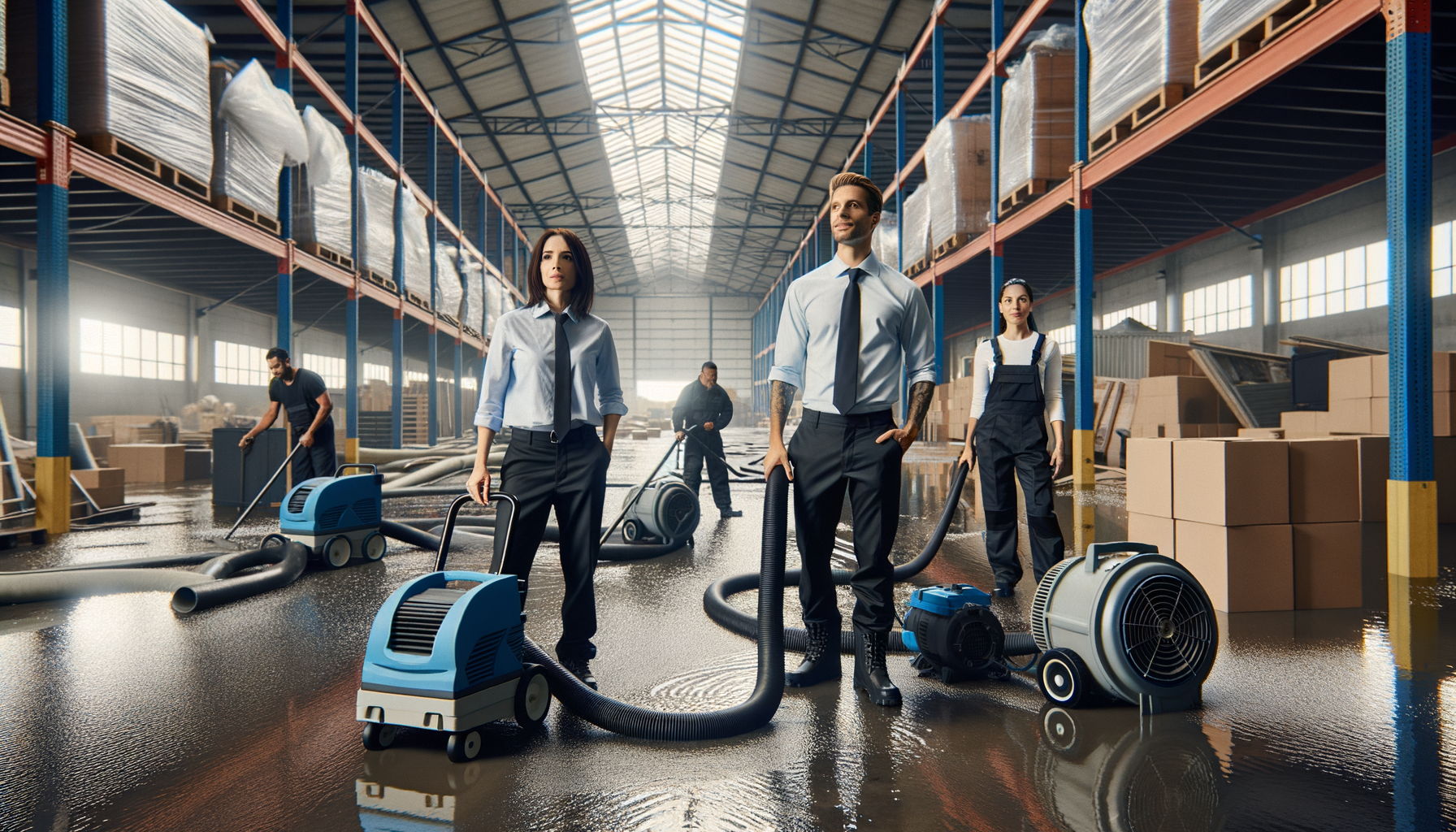
Large-Scale Flood Cleanup for Industrial Sites: Logistics, Drying, Compliance
Large-Scale Flood Cleanup for Industrial Sites: Logistics, Drying, Compliance
Flooding at an industrial or large commercial site is a high-stakes event: production halts, inventory is threatened, electrical systems become hazardous, and contamination risks rise quickly. Effective recovery depends on disciplined logistics, aggressive drying, and documented compliance—executed in the right order. A large-scale response is not simply “more equipment.” It is a coordinated plan that manages people, hazards, moisture movement, and regulatory requirements while protecting critical assets and keeping the path to reopening clear.
1) Logistics First: Stabilize the Site and Control the Work Zone
Before extraction or demolition begins, the site must be stabilized and organized. Industrial facilities often have complex layouts, high-bay spaces, mezzanines, pits, and multiple utility feeds. A successful plan establishes command structure, access control, and clear communication with facility leadership.
-
Establish incident command: define decision-makers, reporting cadence, and documentation responsibilities.
-
Secure utilities: coordinate lockout/tagout for electrical panels, machinery, and gas lines; verify power quality before re-energizing.
-
Map priorities: identify critical equipment, server rooms, control panels, raw materials, and high-value inventory for immediate protection or relocation.
-
Set traffic and staging: designate loading zones, waste roll-off placement, decon areas, and clean storage to prevent cross-contamination.
This is where experienced ohio restoration teams add value: they coordinate with plant engineers, EHS managers, and insurers to keep restoration moving without disrupting safety rules or operational requirements.
2) Safety and Exposure Control in Industrial Flood Conditions
Industrial floodwater can carry oils, chemicals, sewage, or process residues. Even “clean” water becomes hazardous once it contacts manufacturing soils. A risk assessment should be completed early and updated as conditions change.
-
PPE selection based on contaminants: gloves, eye protection, boots, and respiratory protection when aerosols or demolition dust are present.
-
Slip, trip, and fall controls: wet floors, hidden pits, damaged grating, and poor lighting are common after flooding.
-
Confined space awareness: sumps, basements, and utility tunnels may require monitoring and permitting.
-
Heat and electrical hazards: dehumidification equipment adds heat load; damaged wiring and submerged motors require qualified evaluation.
Storm cleanup at industrial scale must also include hygiene controls—handwashing stations, contaminated waste handling, and clear separation between “dirty” and “clean” areas to protect personnel and finished goods.
3) High-Volume Water Removal: Extraction Strategy Matters
Large-scale extraction is about speed and reach. The goal is to remove free water quickly to reduce secondary damage and shorten the drying curve. Industrial sites may require multiple extraction methods working in parallel.
-
Deploy high-capacity water extractors for floors, trenches, and loading areas, supported by pumps for deep water or pits.
-
Use squeegee wanding and vacuum extraction to reduce residual water films that slow evaporation.
-
Address hidden reservoirs: under equipment bases, in insulation, within wall cavities, and beneath raised floors.
Extraction should be paired with immediate removal of unsalvageable porous materials when contamination is suspected. This prevents prolonged odor issues, microbial amplification, and re-wetting of surrounding assemblies.
4) Industrial Drying: Engineering the Airflow, Not Guessing
Drying an industrial building requires an engineered approach that accounts for volume, ceiling height, temperature limitations, and the moisture load within concrete, masonry, and composite assemblies. Effective drying balances dehumidification capacity, air movement, and controlled temperature.
-
Right-size dehumidification: desiccant systems can excel in large air volumes and cooler conditions; refrigerant systems may work well in warmer, controlled spaces.
-
Airflow planning: position air movers to create consistent circulation across wet surfaces and into dead zones behind racking and machinery.
-
Moisture monitoring: track concrete RH, surface moisture, and ambient conditions to validate progress and prevent premature rebuild.
Drying is also an air quality issue. As materials dry, particulates and odors can become airborne. Proper filtration and pressure management help maintain acceptable indoor air quality for workers and protect sensitive equipment.
5) Mold Risk Management: Inspection, Containment, and Documentation
Industrial sites often contain mixed materials—drywall in offices, insulation in mechanical rooms, wood packaging, and paper products in storage. When moisture persists, microbial growth can develop quickly. A proactive mold inspection plan identifies risk areas early, especially in concealed spaces.
-
Targeted inspection of wall cavities, above ceilings, behind casework, and around HVAC components exposed to moisture.
-
Containment where needed: isolate affected zones to prevent spore migration into clean production or warehousing areas.
-
HEPA filtration and source removal: prioritize physical removal of impacted porous materials and detailed cleaning of structural surfaces.
Maintaining air quality is not only a comfort concern—it can be a compliance and operational requirement, particularly where products, electronics, or regulated processes are involved.
6) Compliance and Reopening: Proving the Building Is Ready
Industrial flood recovery must be defensible. Stakeholders may include insurers, corporate risk teams, regulators, auditors, and customers. Documentation should show that hazards were controlled, drying goals were met, and the site is safe to occupy and operate.
-
Maintain a drying log: equipment counts, placement maps, daily readings, and adjustments.
-
Waste and disposal records: contaminated debris handling, manifests where applicable, and chain-of-custody for regulated materials.
-
Post-remediation verification: confirm cleanliness, moisture targets, and functional checks for HVAC and electrical systems.
When logistics, drying science, and compliance are managed together, industrial facilities can reduce downtime, protect assets, and return to production with confidence—without shortcuts that create costly callbacks later.
Need restoration help in Cincinnati?
TRI-WEH Restoration is a locally owned, IICRC-certified restoration contractor based in Cincinnati, Ohio, serving homes and businesses across Greater Cincinnati 24/7. If you need water damage restoration or air duct cleaning, call us any time at (513) 231-6653 or request service online.