


Blog
Commercial Fire Damage Repair for U.S. Facilities: Cleanup to Reopen Fast
Commercial Fire Damage Repair for U.S. Facilities: Cleanup to Reopen Fast
When a fire disrupts a U.S. commercial or industrial facility, the priority is clear: protect people, stabilize the building, and restore operations as quickly as safety and regulations allow. Fire loss rarely ends when flames are out. Heat, soot, corrosive residues, sprinkler discharge, and lingering smoke odor can create a complex mix of hazards that stall reopening and increase long-term costs. TRI-WEH Restoration approaches commercial fire damage repair with a structured, safety-first process designed for warehouses, manufacturing plants, offices, retail spaces, multi-tenant properties, and critical infrastructure support areas.
Start with Safety, Site Control, and Regulatory Coordination
Before any cleaning begins, the facility must be secured and evaluated. Fire scenes can include compromised structural members, unstable ceilings, energized equipment, and contaminated runoff. Effective damage control starts with controlled access, clear hazard communication, and coordination with the Authority Having Jurisdiction (AHJ), insurance representatives, and—when applicable—environmental health and safety (EHS) teams.
- Establish exclusion zones and safe pathways for assessment and work.
- Verify utilities: lockout/tagout for electrical and mechanical systems where needed.
- Assess structural integrity, including roof decking, steel framing heat exposure, and masonry spalling.
- Document conditions thoroughly for claims, compliance, and scope alignment.
In large-scale settings, TRI-WEH Restoration prioritizes a written site safety plan, task-specific hazard assessments, and appropriate personal protective equipment (PPE) based on soot load, chemical involvement, and air quality findings.
Rapid Assessment: What Fire Really Damages
Commercial fire damage repair requires understanding how the fire behaved and what materials were affected. Soot type and residue chemistry vary based on fuel source—plastics, rubber, paper products, oils, or building contents. These residues can be acidic and corrosive, attacking metals, electronics, and HVAC components quickly. At the same time, sprinkler activation or hose streams can create significant water damage, saturating insulation, drywall, inventory, and subfloors.
- Identify soot characteristics and the most effective cleaning methods for each surface.
- Evaluate corrosion risk to electrical panels, switchgear, motors, and control systems.
- Determine if contents are salvageable, restorable, or require disposal.
- Map moisture intrusion and hidden wet areas to prevent secondary damage.
Stabilization and Immediate Damage Control Measures
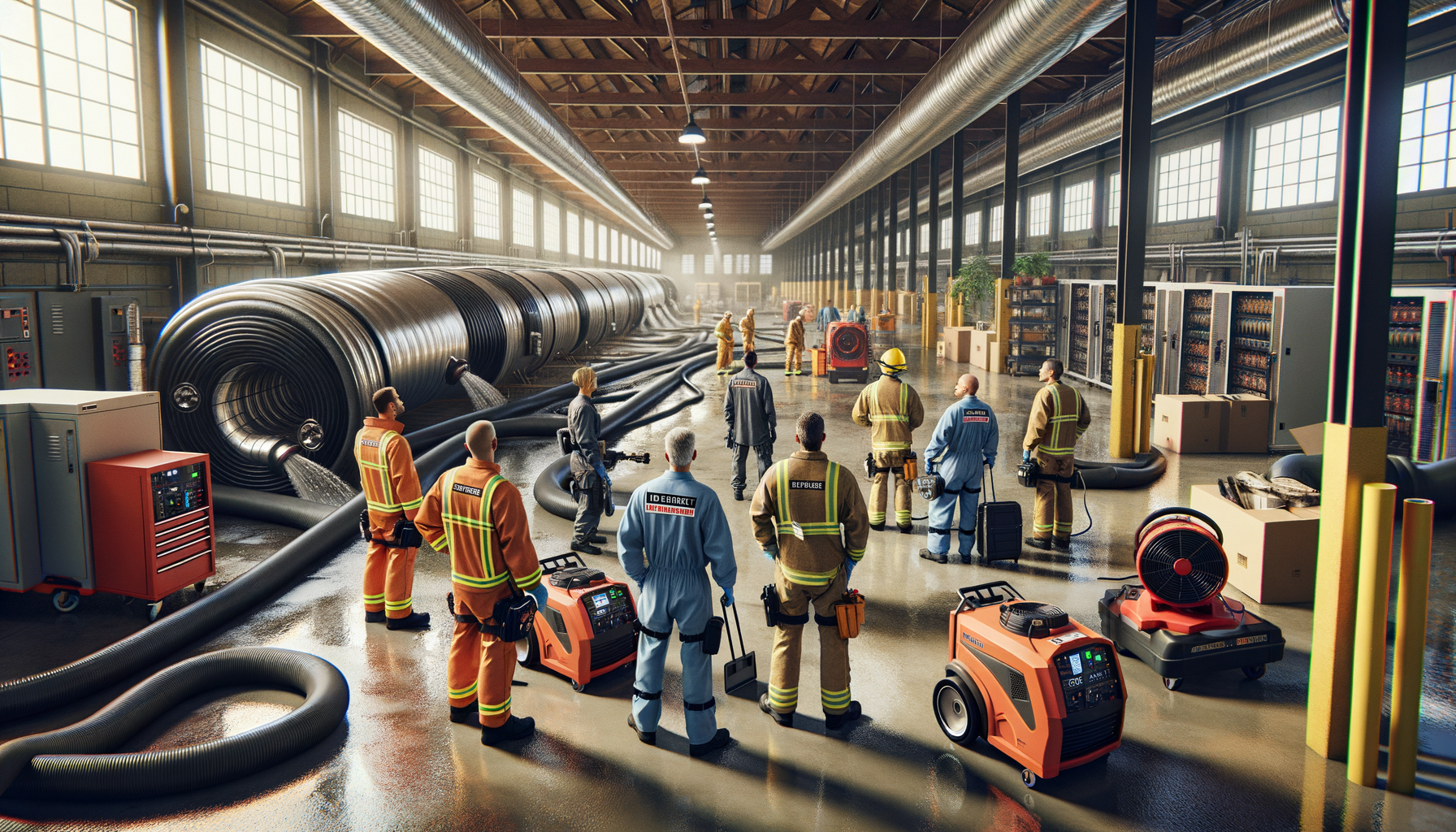
Fast reopening depends on stopping deterioration early. TRI-WEH Restoration deploys stabilization steps that protect the asset while the full scope is finalized. This includes emergency board-up, roof tarping, temporary power planning, and environmental controls to slow corrosion and microbial growth.
- Install temporary barriers to prevent cross-contamination into unaffected zones.
- Use dehumidification and targeted drying to address water damage from suppression efforts.
- Apply corrosion inhibition strategies where appropriate for sensitive equipment and metals.
- Remove debris and charred materials that continue to off-gas and spread residues.
Soot and Residue Removal at Commercial Scale
Large facilities require production-level cleaning that still respects delicate surfaces and critical equipment. Soot is not just cosmetic; it can be conductive, corrosive, and a persistent source of smoke odor. Cleaning methods are selected based on surface type, residue load, and operational needs.
- HEPA vacuuming and controlled dry cleaning techniques to capture fine particulates.
- Wet cleaning with compatible detergents and neutralizers to address acidic residues.
- Media blasting (where appropriate) for structural elements or masonry requiring aggressive removal.
- Specialized cleaning for HVAC components, ductwork access points, and air-handling units.
Throughout the process, containment and negative air strategies help prevent soot migration—especially important in multi-tenant buildings and facilities with clean production areas.
Odor Management: Eliminating Smoke Odor, Not Masking It
Persistent smoke odor is one of the most common obstacles to reopening, especially in offices, retail, healthcare-adjacent spaces, and food-related facilities. Effective deodorization requires removing the source residues first, then treating remaining odor reservoirs in porous materials and air systems.
- Thermal fogging or ULV applications where appropriate after cleaning is complete.
- Hydroxyl generation or ozone (used only under controlled, unoccupied conditions) for air treatment.
- Targeted removal of unsalvageable porous materials that retain odor.
- HVAC cleaning and filtration upgrades to prevent re-circulation of odor compounds.
When Fire Loss Becomes Biohazard Cleanup
Some commercial fire events involve additional contamination concerns: sewage backflow after suppression, rodent activity in disturbed areas, or hazardous contents released during the incident. In these cases, the scope may shift to include biohazard cleanup protocols. TRI-WEH Restoration evaluates contamination pathways and applies appropriate disinfection, waste handling, and documentation practices to support safe reoccupancy.
Verification, Documentation, and Reopening Readiness
Facilities need more than “looks clean” to reopen confidently. TRI-WEH Restoration emphasizes measurable outcomes and clear reporting. This includes moisture verification to confirm water damage is fully addressed, particulate control checks, and visual/olfactory confirmation aligned with the facility’s use and risk profile. For many clients, working with an iicrc certified team provides added confidence that restoration practices follow recognized industry standards for cleaning, drying, and contamination control.
- Moisture mapping and drying logs when suppression water affected building materials.
- Photo documentation, work summaries, and disposal manifests as required.
- Coordination with industrial hygiene consultants when third-party clearance is needed.
- Phased turnover plans to reopen priority zones first while repairs continue.
Getting Back to Business with TRI-WEH Restoration
Commercial fire damage repair is a race against corrosion, contamination, and downtime—but speed must never compromise safety. TRI-WEH Restoration delivers disciplined damage control, large-scale soot and residue removal, water damage mitigation, and proven strategies to eliminate smoke odor. With the right plan, the right equipment, and the right controls, facilities can reopen faster, protect assets, and return to productive operations with confidence.