



Blog
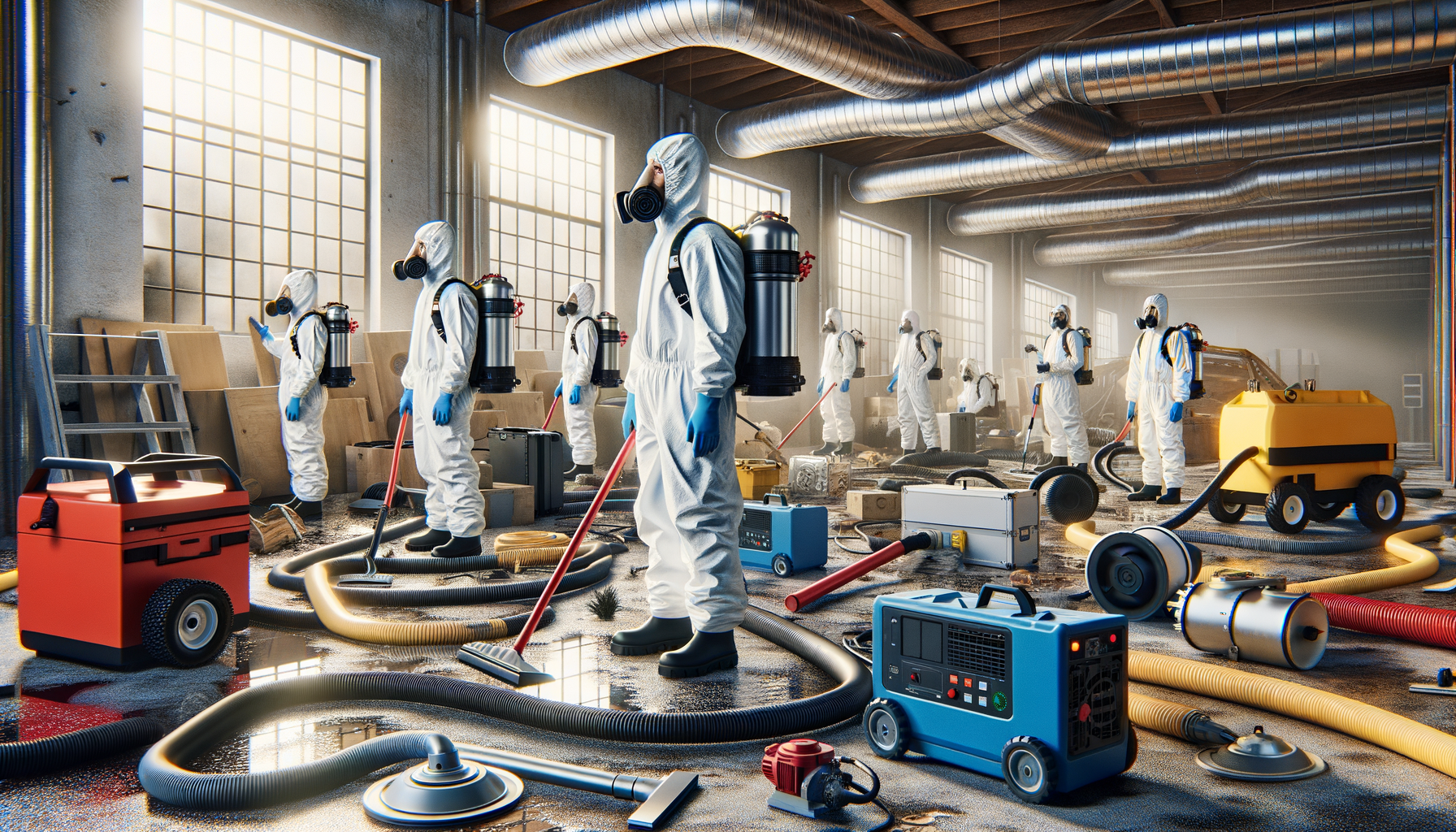
Commercial Mold Remediation Methods for U.S. Facilities: Containment to Clearance
Commercial Mold Remediation Methods for U.S. Facilities: Containment to Clearance
Mold in a commercial or industrial facility is rarely a “wipe it down” problem. It can disrupt operations, impact indoor air quality, and create liability if occupants or tenants are exposed. Effective remediation requires a disciplined process that protects people first, prevents cross-contamination, and addresses the conditions that allowed growth in the first place. TRI-WEH Restoration approaches commercial mold remediation as a controlled project: containment to protect unaffected areas, removal and cleaning to eliminate contamination, and verification to confirm the facility is ready for normal use.
1) Assessment and project planning for large facilities
Commercial sites often have complex HVAC systems, multiple zones, and varied building materials—each affecting how mold spreads and how it must be controlled. The initial assessment focuses on visible growth, odor patterns, moisture mapping, and likely sources such as roof leaks, plumbing failures, condensation, or prior storm cleanup events that didn’t fully dry. We evaluate the extent of structural damage and material saturation, then define work zones, access routes, and equipment staging that won’t interfere with critical operations.
Planning also includes occupant coordination (hours of work, restricted areas, noise/dust controls), documentation, and safety measures aligned with industry guidance such as IICRC S520 principles and OSHA expectations for worker protection.
2) Moisture control: stopping the cause before removal begins
Remediation that doesn’t begin with moisture control is incomplete. Mold will return if humidity, leaks, or condensation remain. Before demolition or cleaning, we identify and correct moisture sources: temporary roof coverings, plumbing isolation, condensate line repairs, or improving ventilation in high-humidity zones. In industrial settings, process water, washdown routines, and temperature differentials can drive chronic condensation—so we address operational factors as well as building envelope issues.
Moisture readings and psychrometric tracking (temperature, relative humidity, and dew point) guide decisions. This data-driven approach is essential for large footprints where one damp area can re-seed adjacent zones.
3) Containment strategies to prevent cross-contamination
Containment is the backbone of commercial mold remediation. In occupied facilities, protecting unaffected areas is as important as cleaning affected ones. Depending on the scope, we implement:
- Critical barriers and full containment using fire-retardant poly and sealed penetrations
- Negative air pressure with HEPA-filtered air scrubbers to control airborne spores
- Decontamination chambers for entry/exit, including clean/dirty transitions
- Dedicated pathways for debris removal to avoid contaminating corridors and loading areas
For multi-floor buildings, we may isolate vertical pathways (shafts, stairwells, risers) and evaluate HVAC zoning. If systems could distribute spores, we coordinate shut-downs, filtration upgrades, or localized isolation to keep operations safe.
4) Worker and occupant safety considerations
Commercial remediation requires strict safety discipline. Personnel use appropriate PPE based on conditions—typically respirators, eye protection, gloves, and protective suits—along with fit-testing and exposure controls when needed. We also apply safe work practices to reduce dust generation, including controlled demolition methods and HEPA vacuuming.
Facilities sometimes present additional hazards beyond mold. If sewage intrusion, animal waste, or other contaminants are present, the project may require biohazard cleanup protocols. In those cases, we apply higher-level controls for pathogen exposure, waste handling, and disinfection, and we segregate waste streams to meet regulatory and disposal requirements.
5) Removal, cleaning, and material-specific remediation
Mold remediation is not a single technique—it’s a set of methods matched to materials and contamination levels. Porous materials with significant growth (e.g., drywall, insulation, ceiling tiles) are typically removed and discarded. Semi-porous and non-porous surfaces (e.g., structural wood, concrete, metal) may be cleaned using a combination of HEPA vacuuming, damp wiping, and targeted antimicrobial application where appropriate.
Where structural damage is suspected—such as compromised framing, delaminated sheathing, or corrosion tied to long-term moisture—repairs are planned alongside remediation so the building is restored, not just “treated.”
6) Structural drying and environmental stabilization
After removal and cleaning, structural drying ensures remaining building components return to appropriate moisture content. This step is critical in large-scale projects, where hidden cavities and thick assemblies can retain moisture long after surfaces appear dry. We use commercial dehumidification, air movement, and controlled temperature to drive evaporation without spreading contamination beyond containment.
Drying progress is verified with moisture measurements and environmental readings. Proper structural drying supports long-term resilience and reduces the chance of re-growth, especially after leaks or storm cleanup scenarios.
7) Clearance: verification, documentation, and reopening
Clearance is the final gate between remediation and re-occupancy. A professional, defensible closeout includes visual inspection, verification that containment was removed safely, and confirmation that moisture conditions are stable. Many commercial clients also require third-party indoor air or surface sampling to validate results, particularly in healthcare, education, manufacturing, and multi-tenant properties.
We provide documentation of the scope, methods used, equipment logs, drying data, and any recommended building or operational changes. The goal is not only to pass clearance, but to keep the facility performing safely after work is complete.
Partnering with TRI-WEH Restoration for commercial-scale results
Commercial mold problems demand industrial-grade controls, trained crews, and a process that protects operations while delivering measurable outcomes. From moisture control and containment to structural drying and clearance, TRI-WEH Restoration provides a disciplined remediation pathway designed for U.S. facilities where downtime, safety, and compliance matter.