



Blog
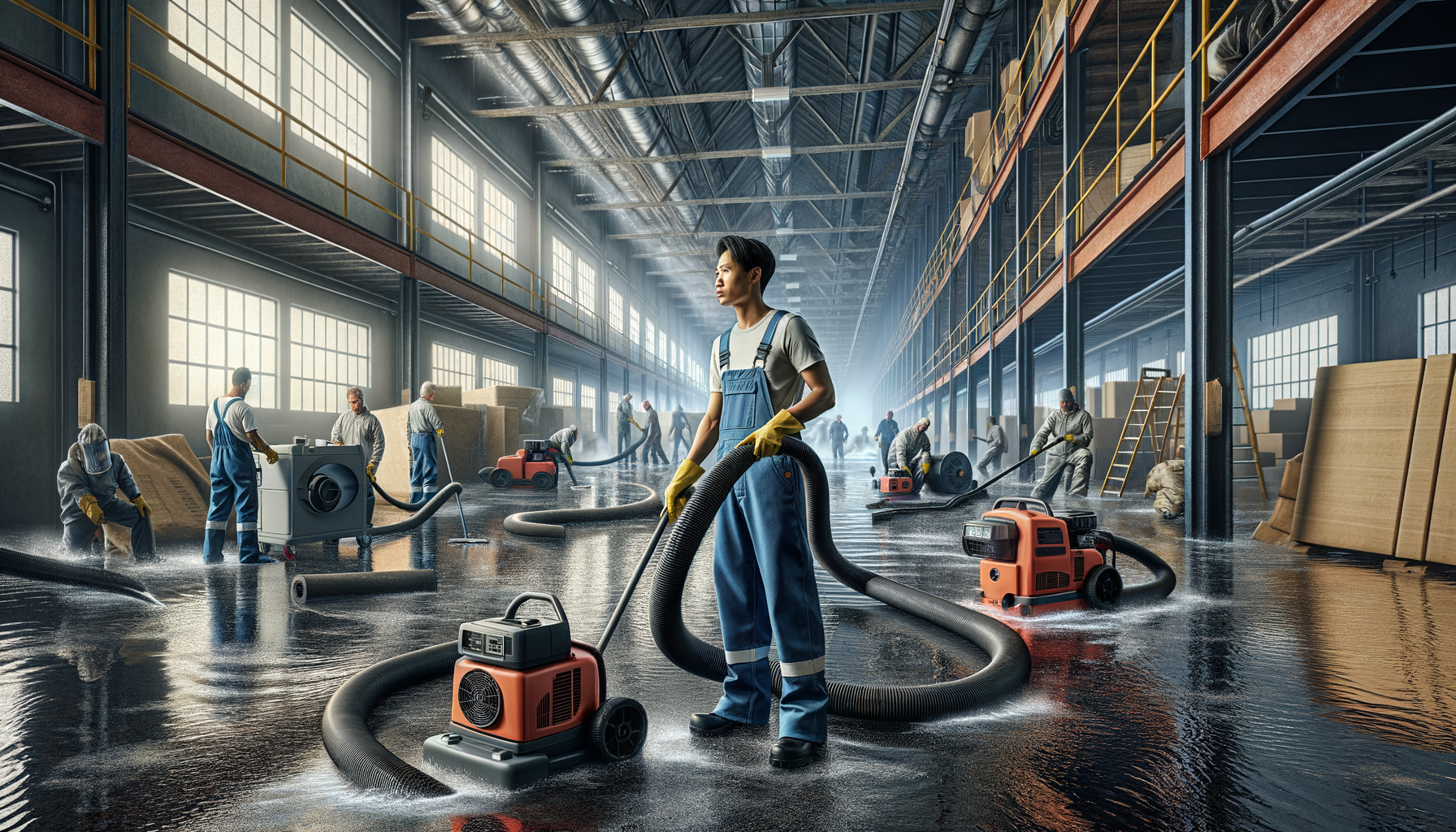
Industrial Water Damage Restoration for Plants and Warehouses: Drying & Dehum Plan
Industrial Water Damage Restoration for Plants and Warehouses: Drying & Dehum Plan
When water intrudes into a plant or warehouse, the real threat is rarely the visible standing water—it’s the trapped moisture in slabs, wall systems, insulation, racking bases, and inventory packaging. A disciplined drying and dehumidification (dehum) plan is what prevents corrosion, electrical failures, microbial growth, and long downtime. At TRI-WEH Restoration, our approach is built for large-scale commercial environments where safety, documentation, and speed-to-restart are non-negotiable.
1) Stabilize the site: safety, utilities, and access control
Industrial water losses can involve energized equipment, chemical storage areas, pits, mezzanines, and confined spaces. Before drying begins, establish a safe work zone and prevent secondary incidents.
- Shut down and lockout/tagout affected electrical circuits and equipment before any water-contact work.
- Identify slip/trip hazards, compromised flooring, and potential structural concerns (soft gypsum, saturated insulation, undermined slabs).
- Confirm water category and contamination risk; if sewage, process water, or stormwater is involved, escalate PPE and cleaning requirements.
- Control access with barriers and signage; keep forklift routes and emergency egress clear.
For facilities with flooded basements or below-grade service corridors, treat them as high-risk: limited ventilation, hidden electrical runs, and elevated mold potential. A flooded basement also tends to concentrate humidity that migrates upward into production and storage areas.
2) Rapid extraction and source control to stop the clock
Drying is most effective when bulk water is removed quickly and the source is controlled. In warehouses and plants, extraction often includes trenches, sumps, elevator pits, and low spots along expansion joints.
- Stop the source (failed sprinkler line, roof drain backup, supply line break, or process discharge).
- Remove standing water using high-volume extraction and pumping, prioritizing electrical rooms, MCC areas, and critical paths.
- Pull saturated debris and porous materials that cannot be reliably dried in place (e.g., collapsed insulation, contaminated cardboard, soaked ceiling tiles).
Extraction alone does not dry concrete or assemblies. It simply creates the conditions for evaporation and controlled dehumidification to work.
3) Moisture mapping and psychrometric targets
A large-scale drying plan must be guided by measurements, not guesswork. TRI-WEH Restoration uses moisture mapping to define affected zones, confirm drying progress, and support insurance or internal reporting.
- Map moisture in slabs, wall bases, and structural elements using appropriate meters and, when needed, in-slab probes.
- Track ambient conditions (temperature, relative humidity, grains per pound/dew point) to set dehum targets.
- Establish “dry standard” reference readings from unaffected areas to define completion criteria.
In industrial settings, we also coordinate with maintenance and EHS to ensure monitoring doesn’t interfere with production, traffic, or sanitation requirements.
4) The drying & dehum plan: airflow, dehumidification, and heat
Effective drying is a balance of airflow (to drive evaporation), dehumidification (to capture moisture), and temperature control (to increase evaporation without damaging materials or inventory). The plan should be sized to the cubic footage and the moisture load—not just the square footage.
- Airflow: Position air movers to create consistent circulation across wet surfaces, including along wall bases, around columns, and beneath shelving where safe and accessible.
- Dehumidification: Use commercial desiccant or refrigerant dehumidifiers based on conditions. Desiccants excel in cooler environments and large open volumes; refrigerants can be efficient in warmer, controlled spaces.
- Heat strategy: Apply controlled heat when appropriate to accelerate evaporation, while protecting sensitive inventory, adhesives, and coatings.
- Pressure management: When contamination or mold risk is present, use containment and negative air to prevent cross-contamination.
For flooded basements, dehum often requires dedicated systems and exhaust planning due to limited air exchange. Without aggressive humidity control, a flooded basement can become a persistent moisture reservoir that undermines drying upstairs.
5) Floor restoration considerations for plants and warehouses
Industrial floors take a beating even when dry. After a water event, floor restoration must address both moisture and performance: slip resistance, flatness, coating adhesion, and joint integrity.
- Concrete slabs: Validate moisture levels before applying coatings or sealers to prevent blistering and delamination.
- Epoxy/urethane systems: Determine whether the coating can be dried in place or requires removal and replacement.
- Tile/VCT/rubber: Check for trapped moisture beneath finishes; replacement may be necessary if water migrated under large areas.
- Joints and transitions: Clean and dry expansion joints and penetrations where water often wicks and lingers.
Floor restoration is also a safety issue—wet or compromised surfaces increase forklift incidents and worker injuries.
6) Mold prevention, mold removal, and mold remediation pathways
In commercial losses, mold can begin developing quickly when humidity stays elevated. Preventing growth is ideal; when growth is present, it must be handled with a controlled, standards-based approach.
- Prevention: Start dehum early, remove wet porous materials, and maintain airflow/temperature targets.
- Mold removal: Physically remove affected materials and clean structural surfaces using appropriate methods (HEPA vacuuming, damp wiping, and controlled abrasion when required).
- Mold remediation: Use containment, negative air, and clearance criteria to ensure the affected area is returned to a safe, dry condition.
Whether the issue is localized or widespread, mold remediation should be integrated into the drying plan—because unresolved moisture will recreate the problem.
7) Documentation, coordination, and restart readiness
Industrial restoration succeeds when drying is aligned with operations. TRI-WEH Restoration coordinates drying zones, equipment placement, and work schedules to minimize disruption while maintaining safety and measurable progress.
- Daily logs of moisture readings and environmental conditions to confirm downward trends and support stakeholders.
- Sequenced reopen plans for sections of the warehouse or production floor as they meet dry standards.
- Final verification that assemblies, floors, and air conditions are ready for repairs, re-coating, and normal operations.
A well-executed drying and dehum plan is the difference between a short interruption and a long-term facility headache. If your plant, warehouse, flooded basement, or other critical space has taken on water, TRI-WEH Restoration can mobilize the equipment, expertise, and documentation required to dry fast, protect assets, and get you back to safe operations.