



Blog
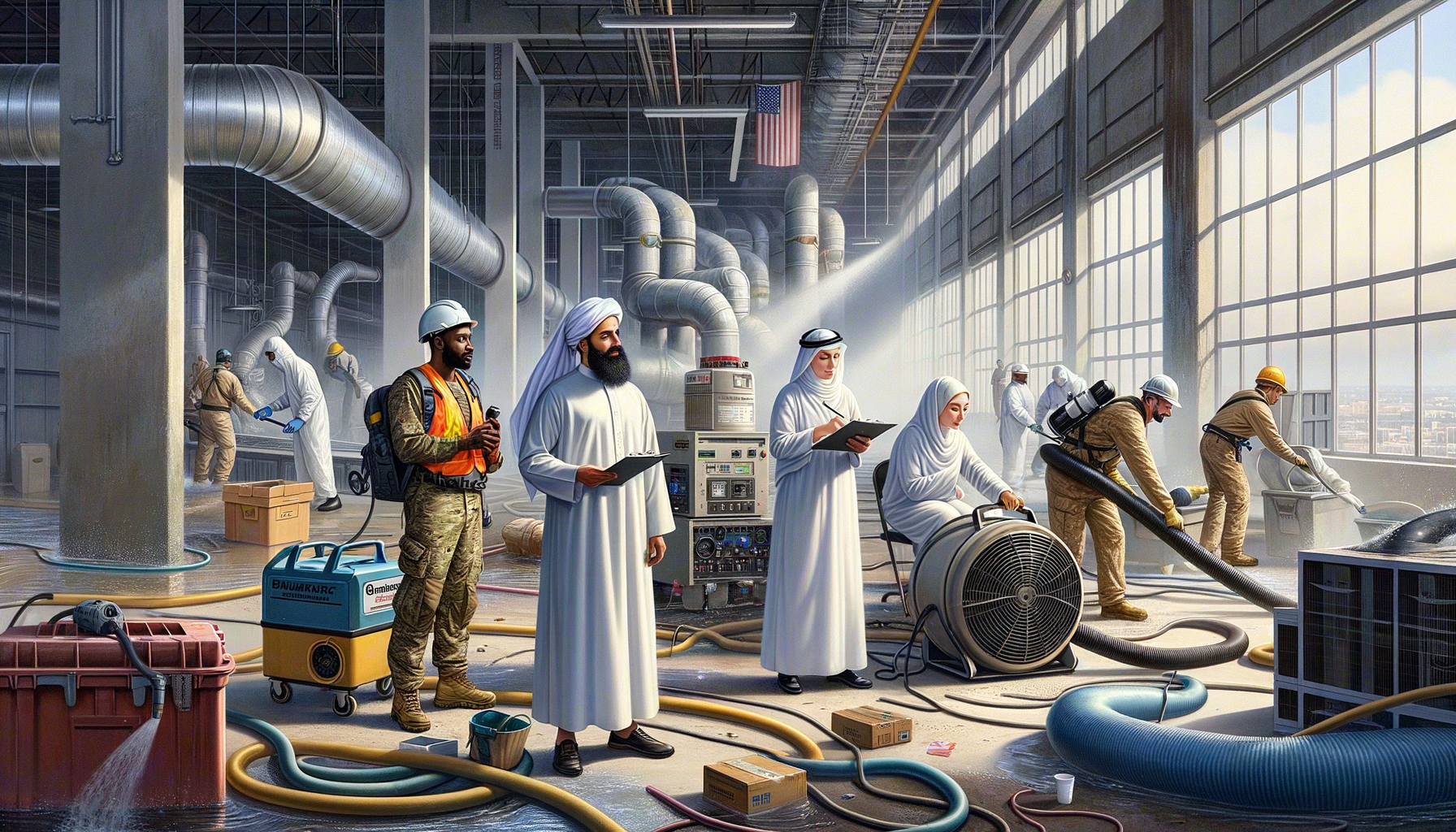
Industrial Water Damage Restoration for U.S. Facilities: Mitigation to Restart
Industrial Water Damage Restoration for U.S. Facilities: Mitigation to Restart
Industrial and large commercial facilities can’t treat water damage like a small office leak. When thousands of square feet are affected—often with critical equipment, inventory, and life-safety systems involved—restoration must be executed as a controlled mitigation project with clear safety rules, documented decisions, and a restart-driven schedule. TRI-WEH Restoration approaches industrial water damage restoration with a focus on stabilizing conditions fast, protecting people and assets, and restoring operations without creating secondary damage like corrosion, microbial growth, or electrical failures.
First priority: Safety, access control, and incident stabilization
Before any drying equipment is deployed, facilities need a rapid risk assessment. Water intrusion can compromise electrical rooms, elevate slip-and-fall hazards, weaken flooring systems, and introduce contamination. A controlled entry plan is essential for industrial sites where forklifts, overhead cranes, chemical storage, or energized systems may be present.
- Lockout/tagout coordination for affected electrical circuits, motors, and panels before cleanup begins.
- Air quality screening where water has contacted organic materials, insulation, or concealed cavities.
- PPE selection based on water category and site hazards (chemical residues, process dust, confined spaces).
- Traffic management to keep restoration work separated from production routes and emergency egress paths.
Stabilization also includes stopping the source—failed sprinkler line, roof drain backup, broken process line, or municipal supply issue—and documenting conditions for insurance and internal reporting.
Water source matters: Clean, gray, black, and specialty systems
Industrial facilities often deal with more than “clean water.” A broken domestic line is different from a sump overflow, stormwater intrusion, or a process-water release. Some sites also rely on well water, which can introduce sediment, minerals, and microbial variability that changes cleaning requirements and drying goals. Categorizing the water correctly helps determine what materials can be saved, what must be removed, and what decontamination is required.
- Domestic supply releases may allow more salvage, but still require rapid drying to prevent corrosion and microbial growth.
- Stormwater and sewer-impacted events typically require removal of porous materials and targeted sanitization.
- Process water may contain additives or contaminants that require specialized handling and waste disposal.
Rapid water extraction at industrial scale
Effective water extraction is the difference between a manageable restoration and a cascading shutdown. Industrial floors, pits, trenches, and mezzanine areas can hold significant volumes, and water can migrate under equipment bases and into expansion joints. TRI-WEH Restoration uses staged extraction plans designed to clear standing water quickly while protecting sensitive assets.
- High-capacity pumps and truck-mounted systems for large-volume removal.
- Weighted extraction tools for carpeted office buildouts within industrial campuses.
- Targeted removal from floor drains, elevator pits, and utility chases to prevent hidden saturation.
- Immediate corrosion-control steps for exposed metals and critical components where appropriate.
Extraction is paired with mapping and moisture documentation so drying can be engineered rather than guessed.
Engineered drying and dehumidification for large facilities
Industrial environments present unique drying challenges: high ceilings, massive air volumes, temperature constraints, and limited downtime windows. Drying must be planned around power availability, equipment heat loads, and the facility’s HVAC capabilities. The goal is to create stable psychrometric conditions that drive moisture out of materials without damaging finishes, electronics, or stored goods.
- Desiccant or refrigerant dehumidification selected based on temperature, humidity load, and building volume.
- Air movement strategies that avoid spreading contaminants while maximizing evaporation.
- Containment zoning when only part of the plant is impacted, minimizing disruption to unaffected operations.
- Ongoing moisture monitoring with documented targets for concrete, drywall, and framing systems.
Concrete slabs and CMU walls often require extended drying time; planning for phased restart and protected work zones helps production resume sooner.
Preventing microbial growth and planning remediation when needed
Industrial water events can quickly become indoor air quality events if moisture remains trapped in wall cavities, insulation, or under flooring. When conditions support growth, mold remediation becomes a controlled process: isolate the affected areas, protect the HVAC system, remove impacted porous materials, and verify cleanliness before rebuilding. For facilities needing mold remediation cincinnati services, the same principles apply—containment, negative pressure, proper disposal, and post-cleaning verification—scaled to the facility footprint and operational needs.
- Selective demolition to remove unsalvageable materials while preserving critical infrastructure.
- HEPA filtration and cleaning protocols to control particulate migration.
- Clear criteria for “dry” and “clean” to support safe re-occupancy and restart.
HVAC protection, duct cleaning, and cross-contamination control
Water damage often impacts HVAC performance and cleanliness, especially when humidity spikes or contaminants become airborne during demolition. Protecting the system early prevents facility-wide spread. When conditions warrant, duct cleaning can remove settled debris and restore airflow quality, particularly after dusty tear-out or when microbial concerns exist. Coordinating HVAC shutdowns, filtration upgrades, and controlled restart procedures reduces risk and supports compliance expectations.
When water damage overlaps with fire events
Some facilities experience combined incidents—sprinkler activation after an equipment fire, for example. In those cases, water mitigation must be coordinated with smoke remediation so residues aren’t driven into porous materials during drying. Sequencing matters: stabilize, remove water, control humidity, and address soot and odor with appropriate cleaning and air-scrubbing methods.
Restart-focused closeout: Documentation, verification, and rebuild coordination
Industrial restoration success is measured by safe restart, not just dry surfaces. TRI-WEH Restoration supports facilities with moisture logs, equipment placement records, and clear scope communication so maintenance teams, insurers, and leadership can make informed decisions. With the right mitigation plan—built around safety, water extraction, engineered drying, and targeted cleaning—industrial facilities can reduce downtime, protect assets, and return to production with confidence.