



Blog
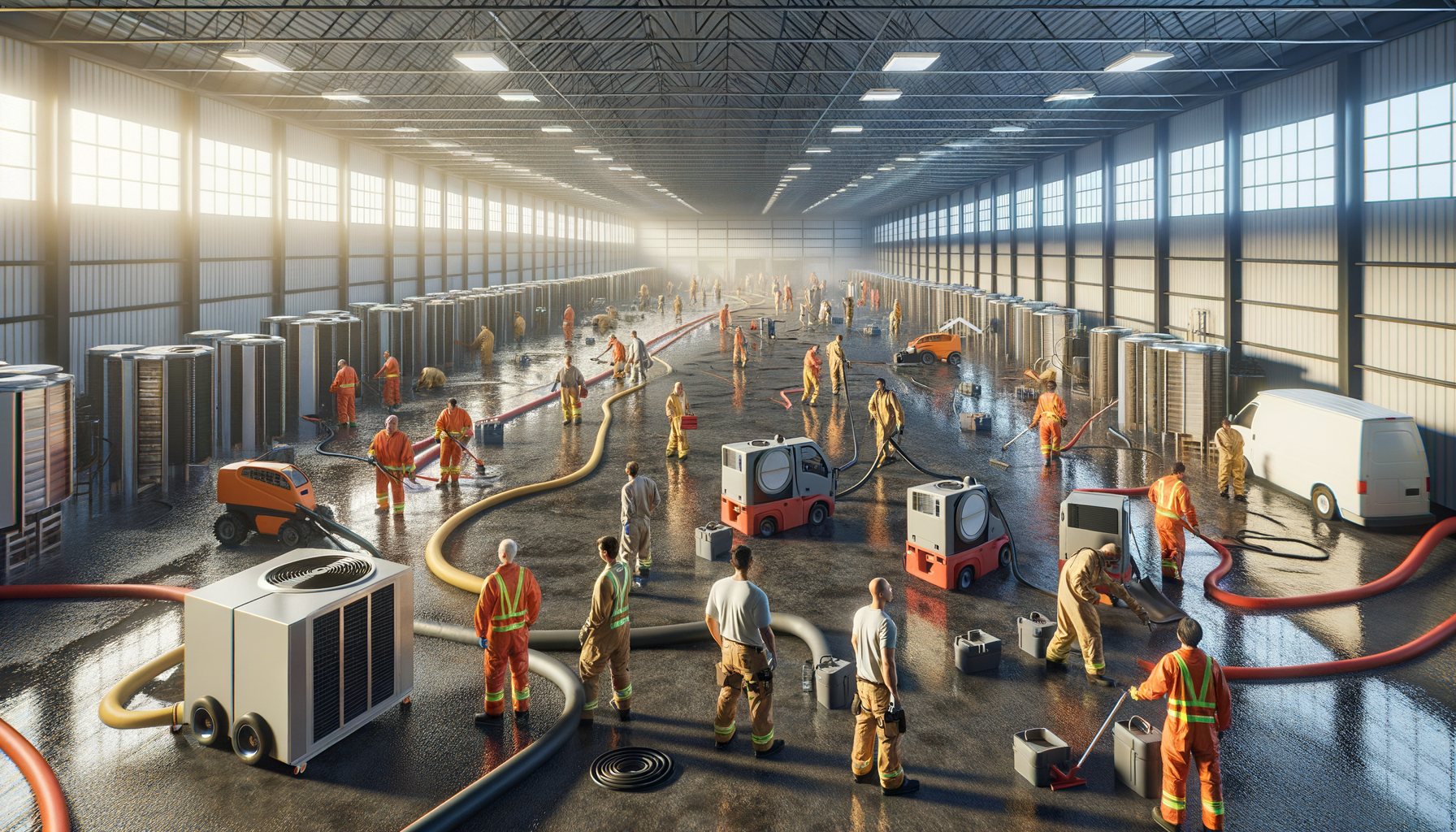
Large-Scale Flood Cleanup for Facilities: Containment, Drying, and Reopening
Large-Scale Flood Cleanup for Facilities: Containment, Drying, and Reopening
When a commercial or industrial facility floods, the priority is not just removing water—it is controlling contamination, protecting occupants, and returning operations without creating long-term moisture or indoor air quality problems. Large-scale flood events can impact multiple building systems at once, from electrical and HVAC to flooring assemblies and wall cavities. TRI-WEH Restoration approaches storm cleanup with a disciplined, facility-grade process that emphasizes containment, damage mitigation, and documented drying so reopening decisions are defensible and safe.
Immediate Safety and Facility Stabilization
Before any extraction begins, a facility must be assessed for life safety hazards. Floodwater can hide energized equipment, compromise structural elements, and introduce contaminants that require controlled handling. Industrial settings add complexity: chemicals, process equipment, forklifts, loading docks, and high-bay storage all change how crews access affected areas.
- Shut down power to affected zones and verify lockout/tagout where necessary.
- Evaluate slip, trip, and fall hazards; establish safe walk paths and restrict access.
- Inspect for structural damage such as sagging ceilings, displaced masonry, or weakened mezzanines.
- Confirm fire suppression systems, alarms, and emergency egress remain operational.
If the flood involves a municipal backup or compromised plumbing, treat the water as potentially contaminated until testing or source confirmation indicates otherwise. Facilities on well water may need additional precautions, including isolating the water supply and verifying potability if the wellhead or supply lines were inundated.
Containment Strategy for Large Footprints
Containment is the difference between a controlled restoration project and a building-wide disruption. In large-scale commercial environments, the goal is to isolate affected zones, prevent cross-contamination, and keep unaffected operations running where feasible. This is especially critical when floodwater has contacted soils, waste lines, or process areas.
- Create physical barriers using durable containment materials and sealed transitions at doors and corridors.
- Establish negative air pressure in affected zones to control airborne particulates and moisture migration.
- Designate clean and dirty pathways for personnel and materials to reduce tracking.
- Set up decontamination stations when contamination risk is present.
Containment planning should also account for HVAC. Shared ductwork can distribute moisture and contaminants across a facility. In many cases, isolating or shutting down air handlers serving wet zones is necessary until cleaning and drying are complete.
High-Volume Water Removal and Moisture Mapping
Large facilities require high-capacity extraction and a clear understanding of where water traveled. Water often migrates under flooring, into wall assemblies, and through penetrations around equipment pads and utility chases. TRI-WEH Restoration uses systematic moisture mapping to guide removal and prevent hidden wet materials from creating future failures.
- Use truck-mounted extraction, high-volume pumps, and squeegee teams to remove standing water quickly.
- Perform infrared scans and moisture readings to identify saturated assemblies and migration paths.
- Open up affected cavities strategically to accelerate drying and reduce demolition scope.
- Document readings and drying progress to support insurance and compliance requirements.
Fast extraction is a core element of damage mitigation, but it must be paired with a plan for what comes next: controlled drying, cleaning, and verification.
Industrial Drying: Airflow, Dehumidification, and Temperature Control
Drying a warehouse, plant, or multi-tenant commercial property is a mechanical process. It requires calculated airflow, appropriate dehumidification capacity, and stable temperature to drive evaporation. Improper drying can leave moisture trapped in insulation, behind wall coverings, or under resilient flooring—conditions that lead to odor, corrosion, and microbial growth.
- Deploy commercial desiccant or low-grain refrigerant dehumidifiers based on volume and conditions.
- Use air movers and directed airflow to target wet assemblies and accelerate evaporation.
- Monitor temperature and humidity continuously; adjust equipment placement as conditions change.
- Pay special attention to concrete slabs, which can hold moisture and delay flooring restoration.
Facilities with sensitive equipment may require specialty drying approaches to prevent condensation and protect electronics, control panels, and production lines.
Cleaning, Disinfection, and Mold Prevention
Flood cleanup is not complete when surfaces look dry. Residues, silt, and contaminants can remain on structural materials and equipment. Cleaning protocols should match the category of water loss and the facility’s use—food processing, healthcare, and manufacturing each have different standards.
- Remove debris and sediment, then clean hard surfaces with appropriate detergents and disinfectants.
- Evaluate porous materials; when saturation is significant, removal may be necessary to prevent ongoing contamination.
- Use HEPA filtration and targeted cleaning to manage airborne particulates during demolition or drying.
Moisture control is also the best mold prevention strategy. If growth is discovered, a qualified remediation plan should be implemented quickly. Organizations searching for mold removal cincinnati services often need both remediation and the underlying moisture correction; without drying verification, mold can return even after cleaning.
Structural Evaluation and Repair Coordination
Floodwater can undermine building integrity, especially when it impacts load-bearing materials, steel connections, or wall systems. Structural damage may be obvious—cracked walls, shifted equipment pads—or hidden, such as compromised fasteners, delaminated assemblies, or weakened subfloors. Coordination with engineers and facility maintenance teams ensures repairs are prioritized correctly and do not interfere with drying.
- Inspect and test building materials before re-covering walls or reinstalling flooring.
- Verify electrical and mechanical systems are safe to energize and operate.
- Plan phased rebuilds to restore critical areas first while secondary zones continue drying.
Reopening: Verification, Documentation, and Operational Readiness
Reopening a facility should be based on measurable conditions, not guesswork. TRI-WEH Restoration emphasizes verification: moisture levels returning to acceptable targets, air quality controls removed only after clearance, and systems tested for safe operation. Documentation supports insurance claims, regulatory expectations, and internal risk management.
- Confirm drying goals are met with recorded moisture readings and humidity logs.
- Conduct final cleaning and ensure containment is removed without spreading dust or debris.
- Coordinate with stakeholders on occupancy plans, safety briefings, and post-restoration maintenance.
With the right containment, drying, and verification strategy, large-scale storm cleanup can be executed efficiently—protecting people, preserving assets, and returning facilities to production with confidence.