



Blog
Smoke Damage Recovery Best Practices for U.S. Commercial Facilities
Smoke Damage Recovery Best Practices for U.S. Commercial Facilities
Smoke damage in commercial and industrial buildings is rarely limited to what you can see. After a fire—whether contained to a single room, a piece of equipment, or a neighboring suite—smoke particulates and corrosive residues can migrate through HVAC systems, elevator shafts, cable chases, and open plenums. The result can be widespread odor, staining, electronics corrosion, and compromised air quality across offices, warehouses, healthcare spaces, retail floors, and manufacturing lines. Effective recovery requires a disciplined, safety-first process that restores the building while protecting occupants, inventory, and critical operations.
Start with a safety-driven assessment and stabilization
Before cleaning begins, facilities should confirm the structure is safe to enter and that utilities are controlled. Smoke residues can be acidic and conductive; when combined with moisture, they accelerate corrosion and can create electrical hazards. A qualified team will document conditions, identify affected zones, and establish priorities based on mission-critical areas, sensitive equipment, and business continuity needs.
- Verify structural integrity and control ignition sources before re-energizing systems.
- Isolate affected HVAC zones to prevent cross-contamination and odor migration.
- Evaluate sprinklers, suppression runoff, and secondary water impacts; smoke events often include unexpected water intrusion.
In some properties, the response may also include addressing a flooded basement from suppression water or broken lines. Even if the primary issue is smoke, standing water can drive humidity upward, worsen odor absorption, and complicate cleaning. Rapid water extraction and drying control are essential to keep the recovery on schedule.
Containment and negative pressure: prevent recontamination
Large commercial facilities benefit from industrial-grade containment strategies similar to those used in high-risk cleaning environments. The goal is to keep soot and odor particles from spreading into clean areas, especially when operations continue in adjacent zones.
- Install critical barriers and zipper access points around impacted work zones.
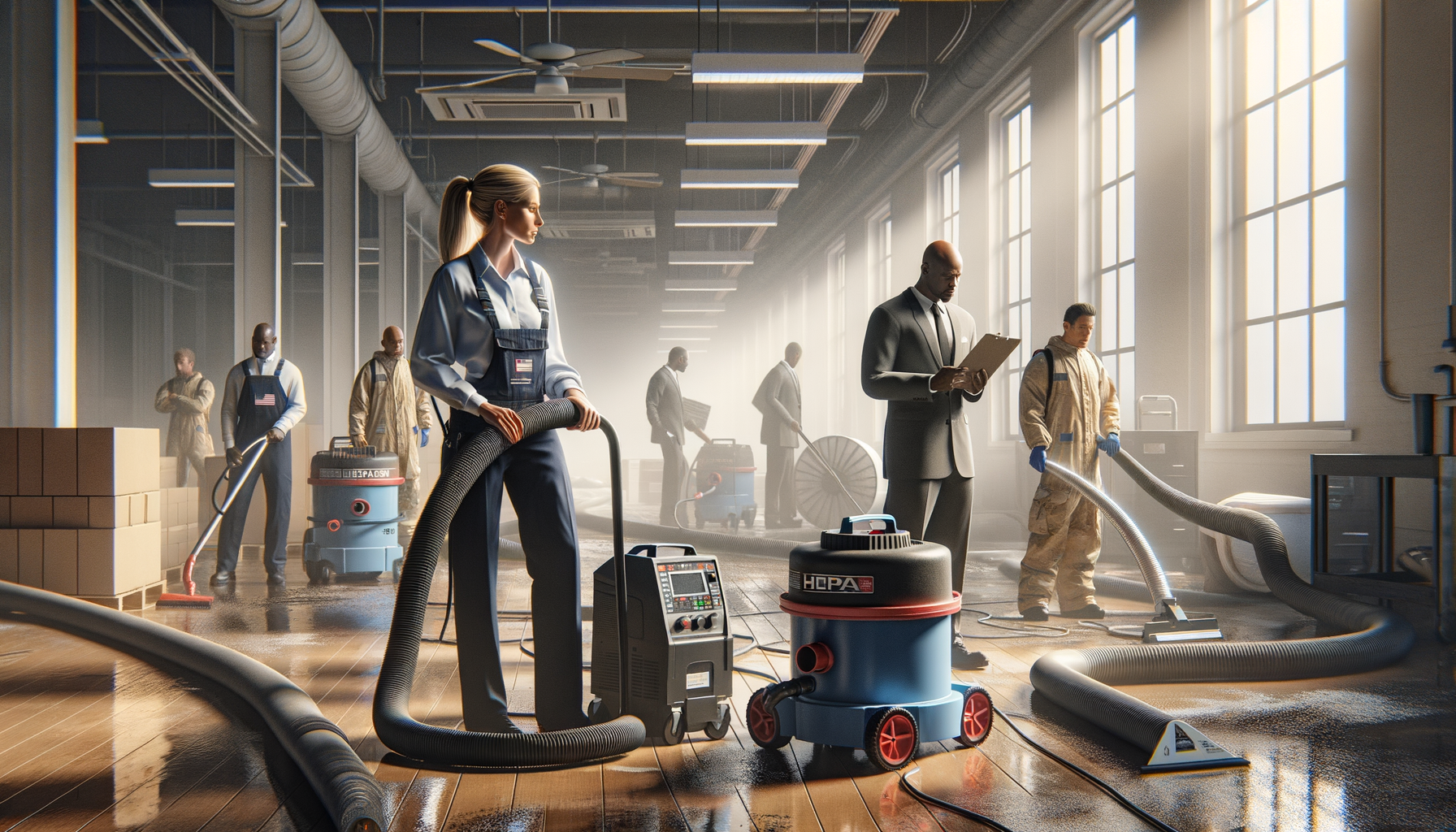
- Use negative air machines with HEPA filtration to capture airborne particulates and support safer work conditions.
- Maintain directional airflow from clean to contaminated areas to reduce cross-contamination.
These controls are particularly important in multi-tenant buildings, food-related operations, healthcare settings, and facilities with strict compliance requirements.
Protect air quality and occupant health
Smoke contains fine particulates and combustion byproducts that can irritate the respiratory system and trigger sensitivities. Protecting air quality is a core best practice—not an optional add-on. A professional plan typically includes particulate monitoring, filtration, and careful sequencing so that cleaning activities do not create new exposure risks.
- Use HEPA-filtered air scrubbers and vacuum systems; avoid dry sweeping or standard shop vacs that redistribute soot.
- Implement PPE requirements based on conditions, including respiratory protection and skin/eye protection.
- Coordinate with building engineering to manage return air pathways and maintain safe ventilation.
Facilities that rely on well water should also verify water quality if water was used during suppression or cleanup. Sediment disturbance, pressure changes, or contamination pathways can impact well systems, and water used for cleaning should meet safe quality standards for the application.
Specialized cleaning for soot, residues, and corrosion control
Smoke residues vary by fuel source and temperature. Protein smoke from kitchen incidents, wet smoke from low-heat fires, and synthetic soot from plastics each require different chemistry and techniques. Best practice is to match the method to the residue to avoid permanent staining, etching, or spreading contamination.
- Dry cleaning methods (HEPA vacuuming, dry sponges) for loose soot before introducing moisture.
- Wet cleaning with appropriate detergents and neutralizers to address oily or acidic residues.
- Corrosion control measures for metals, control panels, and electronics to reduce long-term failure risk.
For industrial sites, equipment cleaning should be coordinated with OEM guidance and safety protocols. Improper cleaning agents can damage coatings, sensors, and electrical components, increasing downtime and replacement costs.
Odor management that goes beyond masking
Persistent smoke odor is a common driver of rework. Effective deodorization is a process—performed after thorough cleaning—focused on removing odor sources and treating porous materials that absorbed smoke.
- Identify and remove unsalvageable porous materials when necessary (insulation, ceiling tiles, heavily impacted soft goods).
- Use targeted deodorization methods such as thermal fogging, hydroxyl generation, or ozone only when appropriate and when spaces are unoccupied and controlled.
- Seal or encapsulate surfaces only after residues are properly removed to avoid trapping odor and staining.
Coordinate water and smoke recovery in combined-loss events
Commercial fire events often create combined losses: smoke plus water. If suppression water reached lower levels, a flooded basement can threaten electrical rooms, elevator pits, stored materials, and structural components. Addressing moisture quickly supports odor control and reduces secondary damage.
- Perform water extraction immediately, followed by controlled drying and dehumidification.
- Inspect for hidden moisture in wall cavities, under flooring, and within insulation.
- Confirm drying goals with moisture mapping and documentation for stakeholders and insurers.
Documentation, compliance, and choosing the right partner
In commercial settings, restoration must align with safety programs, insurance requirements, and operational constraints. Detailed documentation of conditions, cleaning methods, and post-work verification supports smoother claims and internal reporting. Working with an IICRC certified restoration provider helps ensure standardized methods and accountable processes, especially when coordinating multiple trades and phased re-occupancy.
Smoke damage recovery is most successful when it’s treated as a building-wide systems problem—airflow, surfaces, contents, and moisture—rather than a cosmetic cleanup. TRI-WEH Restoration applies commercial-grade containment, HEPA filtration, and proven cleaning and deodorization strategies to restore facilities efficiently while safeguarding air quality, equipment, and continuity of operations.