



Blog
Why Water Damage Claims Get Denied in Ohio
Two Cincinnati homeowners can have identical damage — a soaked subfloor, a ruined drywall run, a cabinet base swollen past saving — and get opposite answers from their insurer. The difference usually is not the damage. It is how long the water was running before anyone noticed.
That single distinction decides more residential water claims than any other factor, and most people first encounter it in a denial letter. Here is how it works, what it means for the way you respond in the first hours, and what your options are if the answer comes back no.
“Sudden and accidental” is doing all the work
Standard homeowners policies cover water damage that results from a sudden and accidental discharge, eruption, overflow, or release of water. A supply line that bursts at two in the morning is the textbook case. A washing machine hose that lets go, a water heater that splits, a pipe that freezes and cracks — those are the losses these policies were written for.
The exclusion sits directly beside it. As United Policyholders documents, the 2011 HO-3 form excludes constant or repeated seepage or leakage of water over a period of weeks, months, or years, and policies commonly exclude the gradual infiltration or presence of water over time. Some forms attach a specific window — fourteen days is a common threshold.
So the question your adjuster is really asking is not “how bad is this?” It is “when did this start?”
The part that surprises people
You might reasonably assume the clock starts when you found the problem. A slow supply-line drip behind a finished basement wall is invisible by definition — nobody chose to ignore it.
Courts have generally not read it that way. United Policyholders notes that decisions have tended to favor insurers’ reading of these exclusions, focusing on how long the water actually leaked rather than when the homeowner discovered it. Insurers point to when the damage began; policyholders argue discovery should govern; the temporal reading usually wins.
That is a hard rule, and it is worth knowing before you are standing in it. It also explains why the same visible damage produces a paid claim in one house and a denial in the next.
Why the water’s category changes the scope
Restoration work is governed by the IICRC S500 standard, which sorts water losses into three categories by contamination — and the category drives what can be dried and saved versus what has to be removed.
- Category 1 is clean water from a sanitary source: a supply line, a water heater, a tub overflow with nothing in it. Most materials can be dried in place.
- Category 2 carries significant contamination: dishwasher or washing machine discharge, toilet overflow containing urine but no solids, water that has picked up contaminants on its way through the structure.
- Category 3 is grossly contaminated: sewage, rising floodwater from outside, any water carrying pathogens. Porous materials in the affected area generally come out.
Two things matter here. First, category is not fixed. Clean water sitting in a warm Cincinnati basement degrades — time and temperature move a Category 1 loss toward Category 2, which is one practical reason response speed affects cost. Second, a category call changes the scope of work dramatically, so it should be documented at the time by whoever is doing the drying, not reconstructed weeks later. Our water damage restoration team records category and moisture readings from the first visit for exactly this reason.
What to do in the first hours
Assume you will have to prove both the cause and the timeline. That is easier at hour one than at week three.
- Stop the source and photograph it before anything is repaired. The failed hose, the split fitting, the appliance connection — that component is your evidence for “sudden.” If a plumber replaces it, ask for the old part and an invoice that states what failed.
- Photograph the water itself, not just the aftermath. Standing water, the high-water line, wet contents in place.
- Write down the time you discovered it and what you noticed first. A dated note made that day carries more weight than a recollection later.
- Report it promptly. Policies require prompt notice, and a delay between discovery and reporting invites the argument you are trying to avoid.
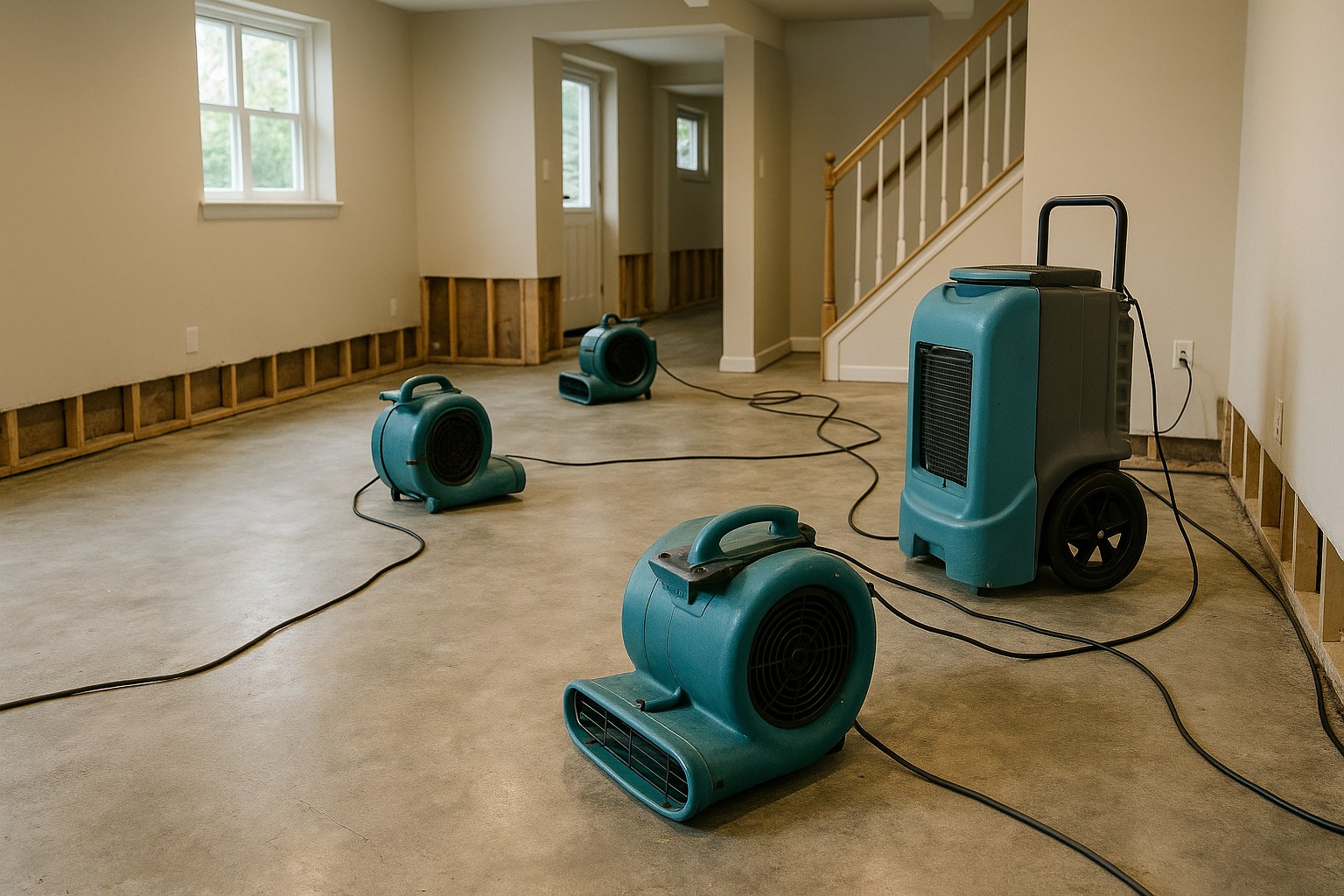
- Mitigate, but do not gut. You are obligated to prevent further damage — extract standing water, get air moving. You are not obligated to demolish anything before it has been documented.
Keep every receipt, including the ones that feel too small to matter. Fans you bought, a hotel night, the plumber’s emergency call. Those are frequently reimbursable and frequently forgotten.
What an adjuster is actually looking at
Adjusters are evaluating cause of loss, timeline, and scope, in roughly that order. Rot, staining layers, mineral deposits, and mold growth all read as duration markers — they suggest water was present long before the day you called.
That is also why mold complicates a claim rather than strengthening it. Visible growth implies elapsed time, and many policies limit or exclude mold except where it follows a covered loss. If mold has already developed, it should be assessed and contained on its own terms rather than folded into the water conversation. Our mold remediation page covers how containment and clearance work.
Where a restoration contractor helps most is documentation. Moisture mapping, category determination, daily drying logs, and photographs create the record an adjuster needs to approve scope — and the record you need if the claim is questioned. A contractor who shows up, dries the house, and hands you a one-line invoice has left you without any of it.
If your claim is denied
A denial is not necessarily the end of it. Ask for the denial in writing with the specific policy provision cited — you are entitled to know which exclusion applied. Read that language against what you documented. If the denial rests on duration and you have evidence the loss was sudden, that evidence is the substance of an appeal.
You can also request a re-inspection, or hire a licensed public adjuster to represent you, though they work on a percentage of the settlement. And Ohio homeowners have a state backstop: the Ohio Department of Insurance Complaint Center reviews consumer complaints against insurers and can look into whether a claim was handled properly.
Policy language varies more than any general article can account for, and none of this is legal or insurance advice — your own declarations page and the specific exclusion cited in your letter are what govern. Read them, and ask your agent to walk you through the provision they are relying on.
The preventable version
Most denied claims trace back to water that ran unseen. Supply lines under sinks, the connection behind the washing machine, water heaters past their service life, and sump pumps that nobody has tested since the last time they were needed. Braided stainless supply lines cost a few dollars and fail far less often than the rubber ones they replace. A water alarm at the water heater and behind the washer costs less than a single drywall repair.
If you are dealing with an active loss right now, call us at (513) 231-6653 — we respond around the clock and are on site within 90 minutes. If you are past the emergency and into repairs, our construction team handles the rebuild, and you can see before and after results from previous projects.